Holistic sleep support for your babies. For families who experienced birth trauma, I'm equipped to approach your sleep plan differently.

No judgement. No rigid methods. Just honest, practical support — at whatever level you need.
A one-off call for parents who want clarity, reassurance, and a clear next step. You're probably doing better than you think.
For families who want a structured plan and sustained support. We start with your birth story — not a sleep log.
After six weeks, follow-up support is available if you need it.
Book a free discovery callFor Barcelona families who want practical support in their real sleep environment. I come to you.
Barcelona only. Transportation fee may apply.
Enter when baby last woke up — the Sleepy Zone Calculator gives you the ideal window to start settling. Sleep diary, automatic wake windows, and daily insights. No app subscription needed.
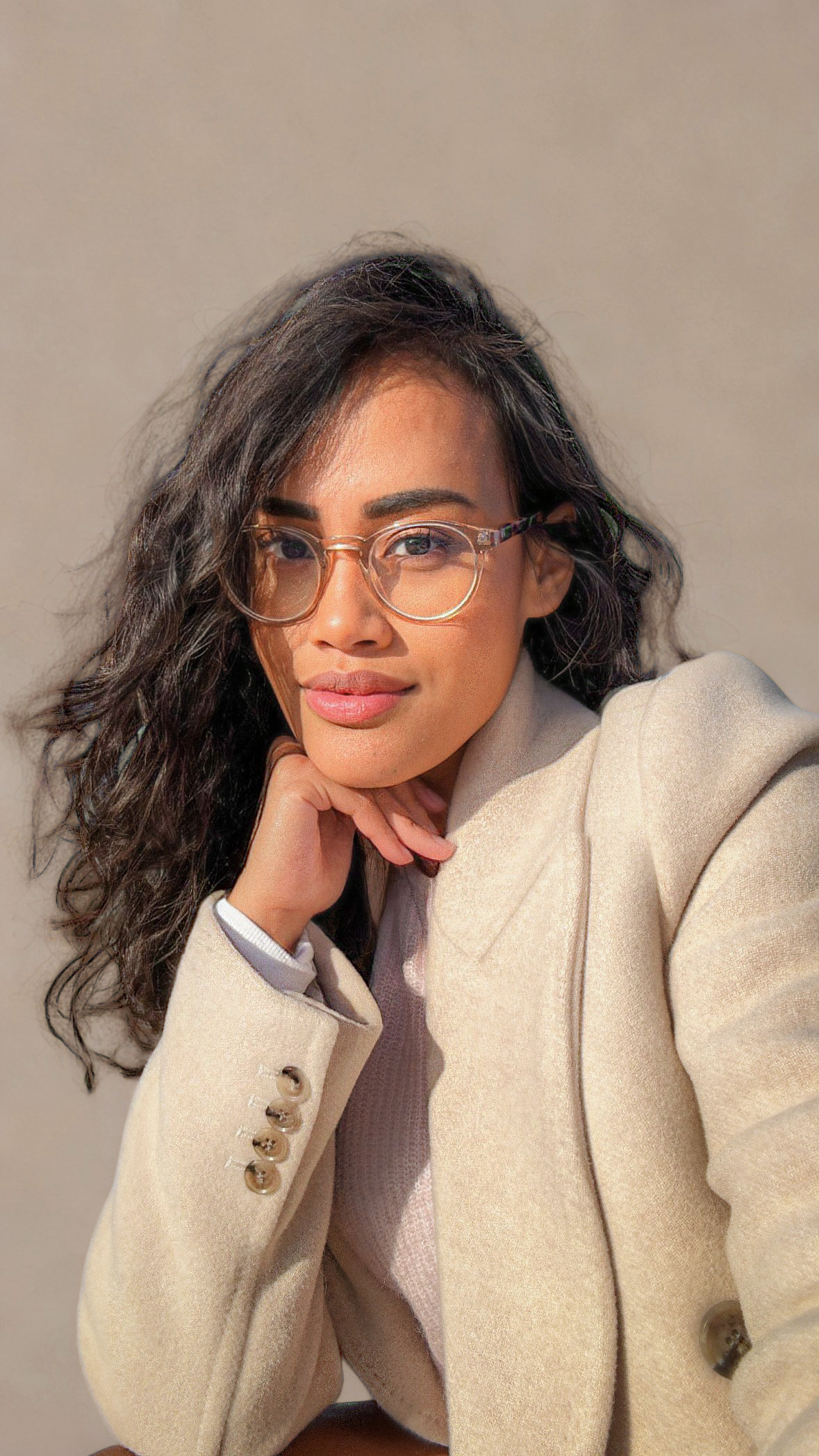
I'm a Barcelona-based baby sleep consultant certified at OCN Level 4 through Babyem UK. My work is shaped by both professional training and lived experience: after my own traumatic birth and PTSD diagnosis, I became deeply aware that many families need sleep support that feels gentler, safer, and more realistic than standard advice.
I'm Indonesian, I've lived in Paris, London, and Barcelona since 2021. I know how isolating early parenthood can be — especially far from family. That experience informs everything I do.
Auriane was born under the very bright lights of an operating theatre.
Like other first-time mothers, I had spent a great deal of time preparing for a calm, relaxed birth. From continuing to do sport, to hypnobirthing classes and daily breathwork. I was sure the birth of my daughter was going to be beautiful.
At week 38+4, my water broke but labour did not start naturally. Despite being admitted for observation, my husband and I remained positive, excited even. We knew that no matter what happened, we were going home with our baby.
After 24 hours of observation, the OB decided to induce me. First, they used prostaglandin to soften the cervix. Nine hours later, even breathing through contractions, I was still very excited. I even found a video of myself putting on makeup, getting ready to meet our first child.
Things were not progressing, and as a result I was given Pitocin. I had opted for a walking epidural because I wanted to keep some control during what was becoming a very long labour. The contractions I felt were painful and intense. I was reassured this was normal for a walking epidural.
26 hours after the start of the induction, my cervix had not dilated beyond 6cm. My baby's heart rate also decelerated three times. Each time the baby's heart rate tanked, a medical team would arrive looking very concerned, talking amongst themselves, repositioning my body again and again. Between the worried conversations and the constant noise of the fetal monitor, I tried very hard to breathe and stay calm.
I remember whispering (we didn't know yet she was a girl) "Stay with me. You can do it."
After the second deceleration, the team agreed the best course of action was a c-section. I happily signed the consent form. We just wanted to go home with our baby, safely.
"Thank you. We are going to prepare the surgery room. It will take around two hours, and in the meantime a team will stay here to monitor you and your baby." — one of the midwives
My husband went to get changed, preparing to accompany me during the surgery. And in that time, I sensed something was wrong. I asked the team to check my baby's heart rate. They were sure she was fine; but I insisted.
I was right. Her heart rate was decelerating again. This time, fast.
I was wheeled into the theatre. I caught a glimpse of my husband just stepping out of the changing room, as clueless as I was. Neither of us knew what was happening.
The theatre was very bright and very noisy. I had the impression of being in a rush hour. And then, I felt it. The incision. The light above me was blinding. I could feel the pressure, the heat, and then the pain — like a hot knife slowly drawn across my skin.
I was shaking uncontrollably. I screamed in Spanish: "Me duele mucho, por favor, ¿cuánto tiempo más?" — and I didn't even speak Spanish then.
"You are doing great, just hold on."
In the middle of all of it, someone else told me to stop shaking.
And then my husband pressed our baby's cheek against mine.
"My love, we have a baby girl." — my husband
The only reaction I could give was another wailing scream.
The next day, an OB-GYN came to our room and apologised for how the c-section had to happen. She told us there simply hadn't been enough time to ensure proper anaesthesia. They had to get our daughter out as quickly as possible.
The birth of my first daughter changed me as a person. I was later diagnosed with PTSD, and I went through EMDR therapy. This is why I became a baby sleep consultant. If my story resonates with you, know that you are not alone — and that things can get better.
Simple, low-pressure, and built around you. No commitment before the first call.
A 20-minute chat to talk through your situation and see if we're the right fit. No pressure, no sales pitch.
We start with your birth experience. You're welcome to share as much or as little as you'd like.
A personalised sleep plan built around your family's capacity, your baby's temperament, and your real life.
Six weeks of WhatsApp support while you put the plan into practice. I'm there for the hard nights too.
If something isn't answered here, you're welcome to ask on the free call.
Book a free 20-minute call. We'll talk through what's going on and work out together whether I'm the right fit.